
Jeevan PokharelMay 28, 2026
UGC Strategy in 2026: The Ultimate Framework for Scaling Brand Video Content

TL;DR
UGC in 2026 is a structured content engine, not a hashtag hope. The most effective ads don't look like ads - they're real people reviewing, unboxing, and using products. Brands winning with UGC platform are running data-driven, multi-platform creator programs with these basics locked in:
- Best formats: unboxings, testimonials, tutorials, before/afters, and day-in-the-life content
- Strategy: brief 5–20 creators at once, A/B test, own the rights, repurpose everywhere
- Key unlock: run top-performing UGC as paid ads from the creator's handle (whitelisting) , 30–50% lower CPA
- Metrics that matter: hook rate, completion rate, CPA, and UGC-influenced revenue
- 2026 trends: AI-assisted creator matching, "dark social" virality, always-on creator ecosystems, and full-funnel UGC (not just top-of-funnel)
Ever wondered how some ads work while others don’t? The secret is that the most effective ads don't look like ads at all. They look like your neighbor unboxing a skincare product, a gym-goer sharing an honest protein shake review, or a parent doing a casual tour of a new stroller he actually bought.
That's user-generated content (UGC), and it has become the single most powerful growth lever available to modern brands.
But "Post a hashtag and hope your customers share it" is not a UGC strategy. In 2026, the brands winning with UGC are running structured, data-driven, platform-native content engines often powered by platforms like Veel's Creator Campaigns.
This guide covers everything: what UGC actually is today, why the psychology behind it is undefeated, how to build a real strategy, and what separates the top 1% of UGC programs from the rest.
What Is User-Generated Content (UGC) in 2026?
User-generated content (UGC) is any content, be it a video, photo, review, testimonial, unboxing, or tutorial, created by real people about a brand's product or service, rather than by the brand itself. The "user" can be a paying customer, a gifted creator, a nano-influencer, or a brand ambassador.
The term has evolved significantly over the years. At the beginning of 2018, UGC meant hoping a customer would post an Instagram photo with your branded hashtag. By 2024, it had evolved into paid UGC creator programs. Now, in 2026, UGC encompasses a structured, multi-platform content ecosystem where brands source, brief, review, own the rights to, and distribute authentic creator content in a single workflow.
Authentic video or photo content by real people, whether organic customers or paid creators, that is designed to look and feel native to the platform it lives on, not like a traditional advertisement.
Learn the fundamentals in our UGC Beginner's Guide
Understand how this fits into your broader marketing mix, read our deep-dive: UGC in Digital Marketing: Benefits, Examples & Strategy
6 Types of UGC That Drive Real Results in 2026
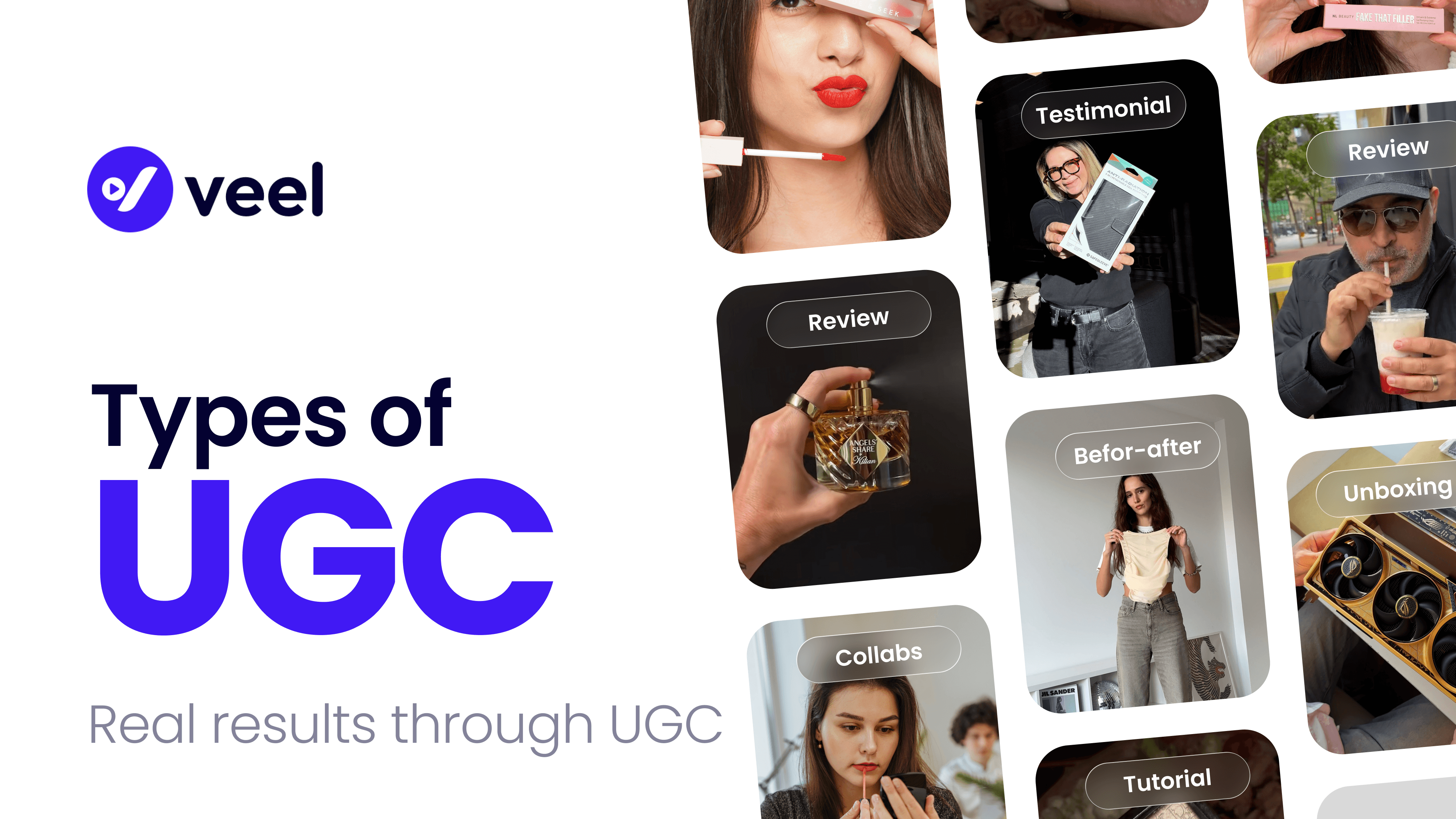
Not all UGC is created equal. The format you choose should match your campaign goal, platform, and buyer journey stage.
Here are the six UGC content types delivering measurable ROI for brands this year.
Unboxing & First Impressions
Captures the excitement of receiving a product. Perfect for launching new SKUs and driving impulse purchases on TikTok and Instagram Reels.
Review & Testimonial Videos
Real opinions from real users. The highest-trust format is ideal for overcoming purchase hesitation at the bottom of the funnel. Embeds powerfully on product pages.
Tutorial & How-To Content
Shows your product solving a problem. Drives SEO, builds product confidence, and works beautifully in email nurture sequences and YouTube
Before & After Demos
Transformation content. Especially powerful for beauty, health, fitness, and home improvement categories. High share rate on social media
Day-in-the-Life Integration
Your product is naturally embedded in a creator's daily routine. The most native UGC format, lowest ad-recognition rate, highest trust transfer.
Creator Duets & Collabs
Creators responding to or building on each other's content drives organic virality and community momentum on TikTok.
- 92% of consumers trust peer content over brand ads
- 5× more conversions than traditional branded content
- 80% higher engagement vs. brand-produced video
- 50% more organic reach driven by UGC campaigns
UGC Trends Defining 2026: What's Working Right Now
The UGC landscape shifts fast. Here are the five trends separating high-growth brands from the ones still running 2023 playbooks.
1. AI-Assisted UGC Briefing and Matching
Brands are now using AI to analyze past campaign performance and auto-generate creator briefs optimized for specific goals. Meanwhile, AI matching algorithms like those powering Veel are surfacing the exact right creator for each brief based on deep audience and performance data, not just category tags.
The result? Faster campaigns, less guesswork, with better ROI from brief ones.
2. Dark Social UGC: The Hidden Growth Engine
UGC shared in private channels, WhatsApp groups, DMs, and Discord servers is driving massive word-of-mouth that doesn't show up in your attribution reports. Brands in 2026 are designing UGC explicitly for 'dark social' virality, like content so useful or entertaining that people share it one-on-one.
Learn more: Dark Social and the Invisible Growth Engine Behind UGC
3. Creator Ecosystem Partnerships (Not Just One-Off Campaigns)
The most successful brands in 2026 are building creator ecosystems like ongoing partnerships with 5–50 niche creators who consistently produce content and become genuine advocates over time.
This 'always-on' approach dramatically reduces cost per content piece and compounds brand trust.
See: Creator Economy Marketing: How Brands Win
4. UGC for Full-Funnel, Not Just Top-of-Funnel
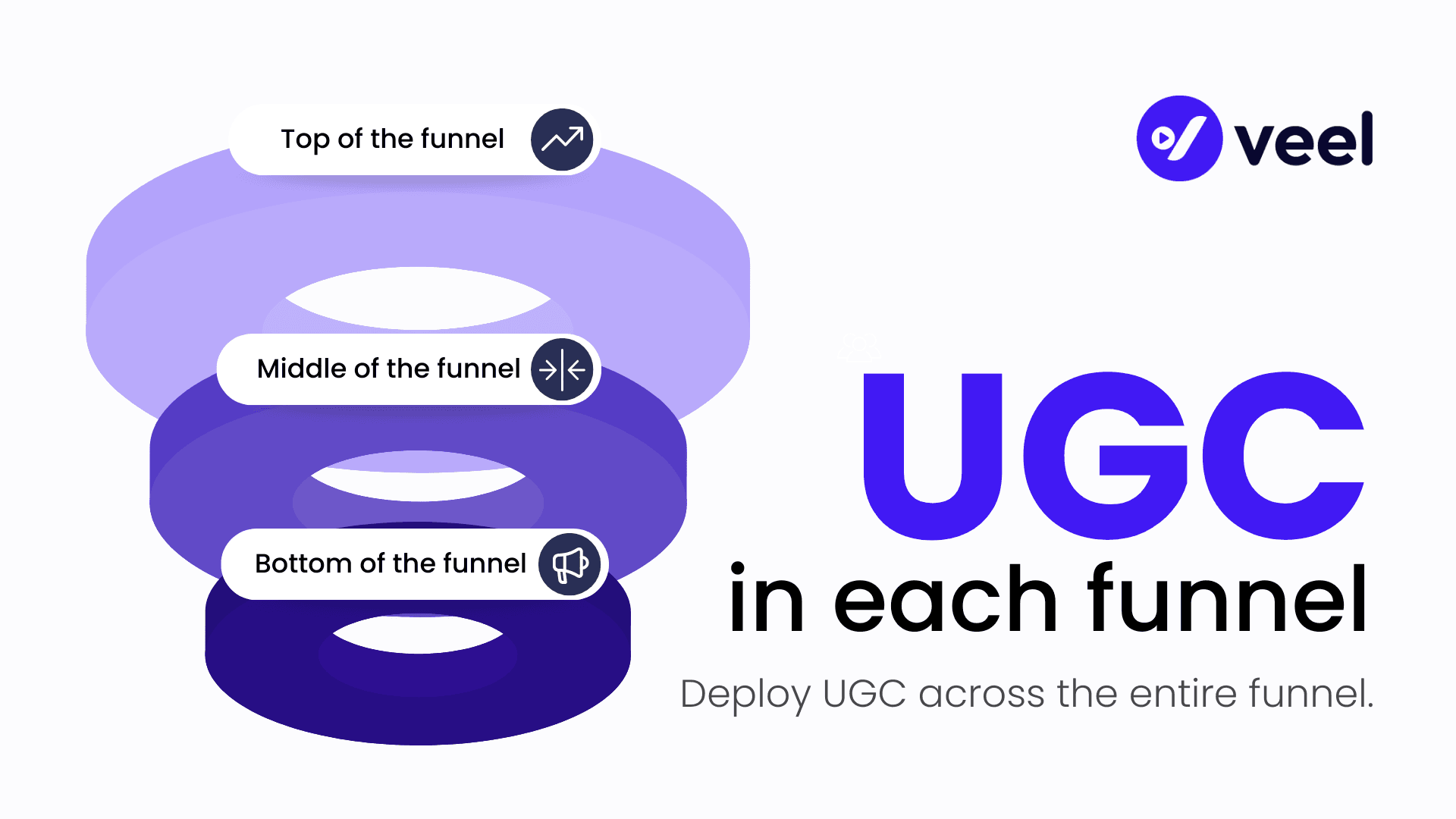
Historically, UGC lived at the top of the funnel. And today, smart brands deploy UGC across the entire funnel, tutorial content for mid-funnel nurture, testimonial videos on checkout pages for bottom-funnel conversion, and post-purchase UGC in email sequences for retention and referral.
5. Micro-Community UGC and Platform Fragmentation
UGC is no longer just TikTok and Instagram. Brands are generating community-specific UGC for Discord, Reddit, LinkedIn, Substack, and niche forums, reaching highly engaged micro-audiences that mainstream social media can't access.
Explore: Why 2026 is the Year of the Creator Ecosystem
How to Build a UGC Strategy That Actually Scales in 2026
The uncomfortable truth about building a UGC strategy is that most brands are doing it wrong. They post one creator video, see decent results, and then….nothing.
In reality, a real UGC strategy is a system built step by step, not a one-off campaign. Here's the 8-step framework that top brands follow.
Set Your UGC Objectives & KPIs
Define what success looks like before you create a single piece of content.
Are you optimizing for click-through rate (CTR) on paid social? Organic reach? Conversion rate on a product page?
Each goal requires a different type of UGC and a different distribution strategy. Brand awareness campaigns call for wider, emotional content, and conversion campaigns need direct testimonials with strong social proof.
Identify and Source the Right Creators
The biggest mistake brands make is chasing follower counts.
Nano creators (1K - 10K followers) and micro creators (10K - 100K followers) consistently outperform mega-influencers on engagement rate, trust, and cost-per-result. With tools like Veel's Creator Campaigns, you can access 550,000+ verified creators filtered by niche, platform, demographics, and past performance.
More sources: Best Ways to Find UGC Creators
Write a Brief for Authentic Content
A great UGC brief includes the core message, platform type, format, a clear CTA, any legal requirements, and examples of the vibe you're going for. It does NOT include a script or forced talking points. Authenticity comes from their voice, not yours.
Run Multiple Content Variations Simultaneously
Brief 5 - 20 creators simultaneously to generate a volume of content you can A/B test. Different hooks, different formats, different creator personalities, let the algorithm show you what works, then double down on winners. This is what separates brands with 2x ROAS from brands with 8x ROAS.
Secure Full Content Rights from Day One
UGC you don't own the rights to is a liability, not an asset.
Ensure you have full usage rights for paid social, organic, email, website embeds, and whitelisting. Few platforms like Veel handle rights management automatically, meaning that every approved piece comes with full brand ownership from day one
Distribute Across Every Relevant Channel
The number one tip to keep in mind is to repurpose aggressively. The video that starts as a TikTok becomes a Meta ad, a YouTube pre-roll, a product page testimonial, an email GIF, and a Shopify embed. Because a great UGC deserves to be everywhere, not just on one platform.
See: Content Repurposing to Drive Higher ROI
Turn UGC Into Performance Ads (Whitelisting)
The biggest unlock is using your best-performing UGC as a paid ad creative run from the creator's handle (whitelisting). Whitelisted UGC ads consistently achieve 30 - 50% lower CPA than ads run from brand pages.
See: How to Turn Influencer Content Into UGC Ads That Work
Analyze, Iterate, Scale
Track performance at different levels, such as the creator, format, and hook level. What opening line drove the most watch time? Which creator style drove the most conversions? Feed those learnings back into your next brief. This is how UGC becomes a compounding asset. Analytic tools like the Performance Analytics dashboard make this loop seamless.
Brands looking to hire dedicated creators: Why Brands Hire Creators and What It Means for Smart Marketing in 2026
Measuring UGC Performance: The Metrics That Actually Matter
You’ve used UGC for ad creatives, but how has it successfully helped in scaling your business? Here are some ways you can seamlessly scale your business.
Hook Rate (0 - 3 sec retention)
What % of viewers watch past the first 3 seconds? This measures how strong your opening is, the most critical moment in any UGC video. Target: 30%+
Video Completion Rate
Of everyone who starts watching, how many finish? High completion rates signal strong content and feed algorithm favorability on TikTok and Reels. Target: 40%+
Cost Per Acquisition (CPA)
When using UGC as a paid ad creative, what does it cost to acquire one customer? Compare UGC CPA vs. branded video CPA to see the real performance delta.
Content Reuse Lifespan
How long does a single UGC asset remain effective before the audience scrolls? High-quality UGC often outperforms branded video 3 - 6x longer before creative burnout.
Earned Media Value (EMV)
The dollar value of organic reach generated by UGC you didn't pay for directly shares, duets, and comments that drive additional reach beyond paid amplification.
UGC-Influenced Revenue
Revenue from customers who engaged with UGC at any point in their journey is tracked via UTM parameters, pixel attribution, or post-purchase surveys.
Veel's Performance Analytics dashboard tracks all of these metrics in real time, tied to specific creators and content formats, so you always know which videos are driving revenue, not just reach
So, how is Veel different from other UGC platforms?
Veel is the only UGC platform that combines creator sourcing, campaign management, content review, rights management, auto-scheduling, multi-platform publishing, global creator payouts, and performance analytics in one place with official partnerships across Meta, TikTok, YouTube, LinkedIn, and Shopify.
👉Veel vs Other UGC Platforms Full Comparison
FAQs
What’s the difference between UGC and influencer marketing?
Influencer marketing focuses on audience reach. UGC focuses on authentic content your brand can reuse. Veel lets you manage both in one place.
How much does a UGC campaign cost in 2026?
Most UGC campaigns cost between $1,000 - $5,000 for 10 - 20 creator videos, far lower than traditional ad production.
Do I need a large audience to use UGC?
No. UGC works especially well for growing brands because creators provide both content and reach.
How do I get rights to UGC content?
Content rights must be agreed on up front. With Veel, approved content comes with built-in brand usage rights.
Where should brands post UGC in 2026?
TikTok, Instagram Reels, and YouTube Shorts drive the most reach, while Meta ads and Shopify pages convert best.