
Garima GurungOctober 26, 2026
UGC for Ecommerce Brands: How to Turn Creator Content Into Sales
You’ve paid for product photography. You’ve partnered with creators, and your moisturizer videos are pulling decent engagement on TikTok and Instagram Reels. Sales still aren’t moving.
The instinct is to book more creators. But somewhere in a shared drive, a dozen finished videos are doing nothing. One creator’s morning routine could be your best paid ad. A customer’s “this actually worked” clip could convince the shopper hovering over the Add to Cart button. A texture demo could answer the exact question that makes people leave your product page.
For most brands, UGC for ecommerce isn’t a content shortage. It’s a placement problem.
How do ecommerce brands turn UGC into sales?
Ecommerce brands turn UGC into sales by matching each creator video to one job in the funnel: discovery on social, proof in paid ads, and answers on the product page. Secure usage rights up front, brief creators around real customer questions, test hooks, and measure revenue by asset rather than views.
The rest of this guide shows how to do that.
Why US brands are putting more budget behind creators
The IAB reports that US creator advertising spend reached $37 billion in 2025 and projects $44 billion in 2026. That growth is outpacing the wider ad market. The IAB’s CEO has also said that budgets are concentrating where spend can be tied to business results.
So the pressure is on. Creator content is no longer a “nice to have” line item, and finance teams are asking what it returns.
Here is how the content maps to the funnel:
- Awareness: creators introduce the product to audiences you couldn’t reach on your own.
- Consideration: tutorials, demos, and honest reviews answer the questions that stall a purchase.
- Conversion: the strongest clips run as ads and sit on the product page, right where the buying decision happens.
One creator video, four jobs
Say a home decor brand sells modular planters. A creator films a cramped apartment balcony turning into a place you’d actually sit. She doesn’t read a spec sheet. She just shows the before and after.
Viewers can picture their own balcony, which is why it works. And it doesn’t have to stop at one post:
- Organic social. The creator posts it to her audience.
- Paid ads. The brand runs it through TikTok Spark Ads or Meta partnership ads, so it still looks like a creator post. Our guide to turning influencer content into UGC ads covers the setup.
- Product page. A shoppable video next to the buy button does the work a wall of copy can’t. UGC reviews let you embed it on Shopify, WooCommerce, Webflow, or a custom store.
- Follow-up content. An assembly clip, a small-space version, a “what ships in the box” video. Each answers a different objection.
Without a system, this falls apart quickly. Files get buried, nobody remembers who owns the rights, and the best clip is in someone’s DMs. A content library organized by campaign and channel prevents that. The longer case for reuse is in our piece on content repurposing and ROI.
Get usage rights and FTC disclosures sorted before you reuse anything
This is the step US brands skip, and it’s the one that causes trouble.
Usage rights. A creator posting your product on her own feed doesn’t automatically give you the right to run that video as a paid ad or embed it on your site. Agree on where the content can run, for how long, and whether music is cleared, before production starts. On Veel, creator campaigns include usage rights and licensed music from day one, which removes a lot of that back-and-forth.
Disclosure. The FTC’s Endorsement Guides expect creators to clearly disclose material connections, such as free product or payment. Its rule on fake reviews and testimonials also means you shouldn’t pass off staged or AI-generated content as genuine customer experience. Your legal counsel should confirm what applies to your campaigns. Check authenticity as part of your workflow, too. Our post on AI-generated creators explains why.
Five steps to a UGC strategy that sells
You don’t need an enterprise budget. You need a few habits.
1. Pick creators your buyers already trust
Follower count is a weak filter. A niche fitness creator demoing a recovery product will often beat a lifestyle account ten times the size for a sports nutrition brand. Look at audience fit, how naturally they handle a product, and whether their comments read like real conversations. Micro-influencers often give the best return per dollar. Before negotiating, check typical rates on Creator Pricing.
2. Brief around customer questions, not “make something engaging”
“Make an engaging product video” leaves a creator guessing. Pull the real questions from your reviews, support inbox, and sales calls instead. A skincare brand needs texture and application shots. A home appliance brand needs a “how easy is it to clean” demo. Give creators the goal and let them handle the voice. If you need opening-line ideas, start with these UGC ad hooks.
3. Decide where each video will run before you shoot it
Social, paid, product page, email? Which formats and lengths do you need? Are the rights in place? Answer these first and you commission content for a purpose. Answer them after, and you spend a week trying to make a vertical clip fit a landing page.
4. Test the story, not just the thumbnail
A coffee brand could run a morning-routine video, a convenience video, and a taste video for the same product. Each speaks to a different motivation. Test hooks and messages, and hold everything else steady (budget, audience, placement) so you can tell what actually moved results. Our walkthrough of UGC video ads for Facebook shows a clean test setup.
5. Measure revenue per asset
Views and likes tell you people noticed. They don’t tell you whether anyone bought. Pick metrics that match the job each video has:
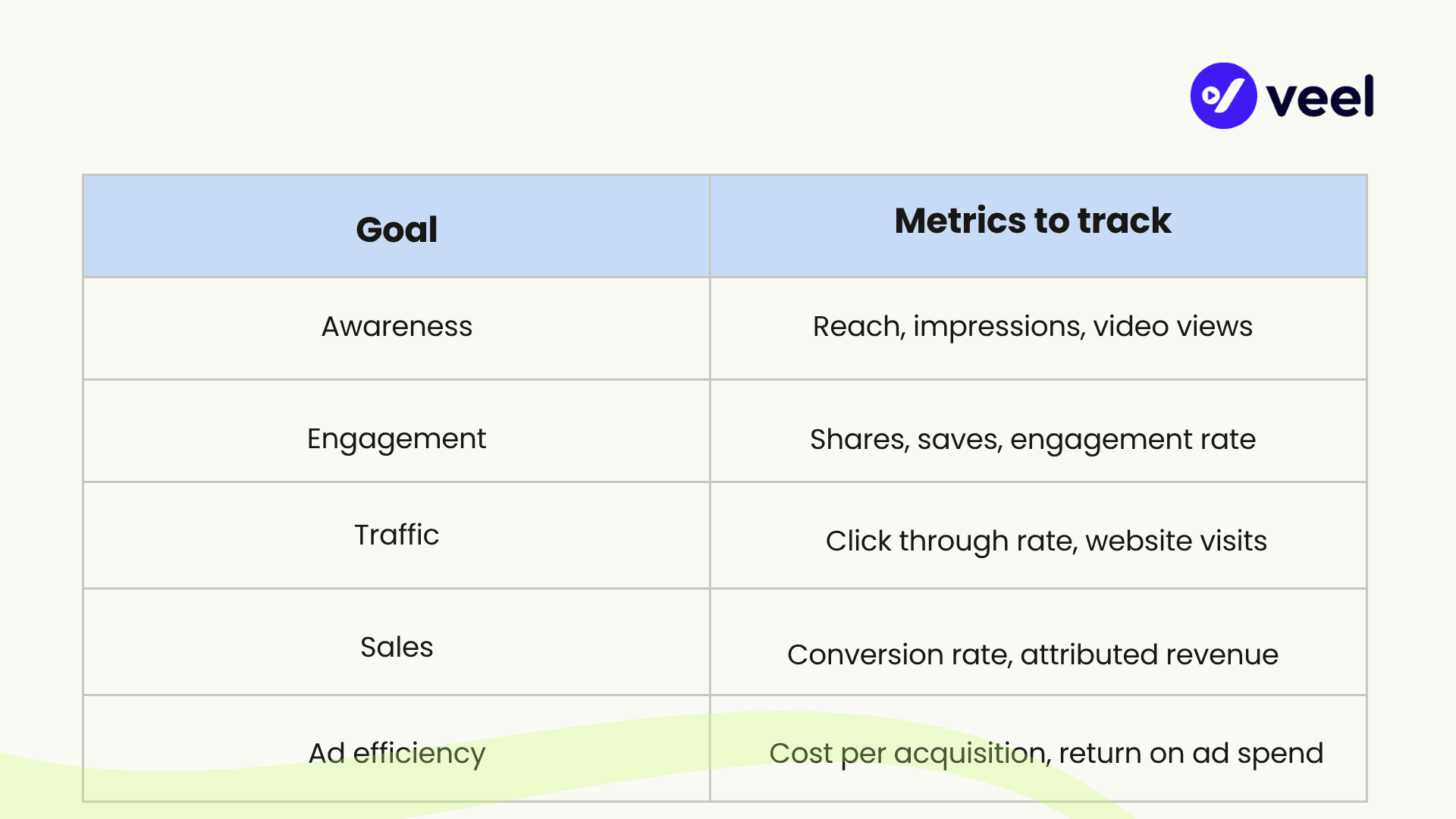
The cleanest way to get revenue per asset is to give every creator video its own tracked link or code. That’s how affiliate tracking works, and it’s built for performance marketers who need to see which creator and which clip earned the sale. Attribution is never perfect, so run a holdout test when you need proof of true incremental lift.
Timing note: It’s late October. If you want creator content live and tested before Black Friday and Cyber Monday, you’re already close to the wire. Our BFCM creator marketing plan works backward from the date.
Where AI helps (and where it shouldn’t)
Once you run more than a handful of creators, the admin grows faster than the content. The IAB’s 2025 creator economy report found that nearly three in four creator ad buyers were using or planning to use AI for creator marketing tasks.
Reasonable uses:
- Drafting creator briefs and campaign ideas
- Adapting one video into several formats
- Finding customer videos that already mention your brand
- Scheduling posts and moderating comments
On Veel, AI Lens scans six platforms for videos mentioning your brand and checks content authenticity. Sis is the AI social media manager that plans and drafts posts in your brand voice. You can read how it works in Introducing Sis.
AI shouldn’t replace the creator’s voice. A person’s face, personality, and honest reaction are why UGC works. Keep a human reviewing for accuracy and brand fit.
Putting the workflow in one place with Veel
Most teams run this across a creator marketplace, a shared drive, a scheduler, a review widget, and a spreadsheet for payouts. Veel combines it into one platform:
- Creator Collaboration: find creators, run briefs, and pay them globally.
- Content Library: store, organize, and publish assets across channels.
- UGC Reviews: put shoppable creator video on your product pages.
- Affiliate Marketing: track sales by creator and by video.
You can start free, and the UGC Readiness Report grades how prepared your store is to work with creators. For a wider view, see our ecommerce and DTC solutions and pricing.
FAQ
What is UGC for ecommerce?
It’s customer and creator-made video, photos, and reviews used to market an online store. Brands run it as social posts, paid ads, and embedded product page content.
Do I need permission to reuse a creator’s video in ads?
Yes. Get written usage rights that cover paid ads, your website, duration, and music before you reuse a video outside the creator’s own post.
How many creators does a brand need to start?
Three to five is enough to find a pattern. Test different hooks across them, keep the winners, and expand from there.
How do I measure whether UGC drives sales?
Give each creator video a tracked link or code, then compare revenue by asset, creator, and channel. Use holdout tests when you need to prove incremental lift.