
Jeevan PokharelAugust 14, 2026
Micro-Influencer Marketing: The Complete Guide for Brands in 2026
-1.png&w=3840&q=75)
A micro-influencer is a creator with roughly 10,000 to 100,000 followers who owns a specific niche and consistently out-engages bigger accounts. For brands running influencer marketing on a real budget, micro-influencers are the most cost-efficient tier - they deliver both reach and conversion from the same spend a single macro deal would consume alone.
This guide covers what micro-influencers are, the real engagement and rate data behind why micro-influencer marketing keeps outperforming bigger-name partnerships, how to find and vet them, how to run a full campaign step by step, and how to prove ROI to leadership.
What Is a Micro-Influencer?
A micro-influencer is a creator with roughly 10,000 to 100,000 followers who has built authority around one specific topic- skincare, home cooking, personal finance, fitness for new parents, or any other niche. Micro-influencers sit between everyday users and full-time celebrities, giving brands access to an engaged, trusting audience without celebrity-level fees.
Because their content lives inside a niche, followers treat micro-influencers as informed peers rather than distant public figures. That's the entire reason micro-influencer recommendations move people to act.
Micro-Influencer Statistics: Engagement & Rates
Numbers make this section rank and get cited - top-performing competitor guides lead with sourced data rather than general claims. A few worth building on (replace/expand with your own current data pull before publishing, since these figures age quickly):
- Micro-influencers make up roughly 23% of influencers on TikTok and about 18% on Instagram, according to Influencer Marketing Hub's benchmark data.
- On Instagram, micro-influencers generate close to a 2% engagement rate on both organic and sponsored posts, compared to roughly 1.5% for mid-tier and 1.2% for macro-influencers, per a Later engagement-rate study.
- On TikTok, micro-influencer engagement rates run comparably high to accounts with a million-plus followers, per Statista and Influencer Marketing Hub's own benchmark report.
Note on sourcing: Several lower-authority sites currently circulating stats like "5.4x more engagement per dollar" or "$6.50 earned per $1 spent" attribute them to HubSpot or generic "2026 data" without a verifiable source , I'd avoid citing those until you can trace them to the original study, since unverifiable stats are a credibility risk if a reader or editor checks the citation.
Micro-Influencer Rate Benchmarks
Rates vary by platform, niche, and deliverable, but as a general planning range: Instagram micro-influencer posts typically run in the low hundreds of dollars per post, TikTok tends to run lower per post than Instagram, and YouTube integrations command more given production time. Always confirm current rates with a live benchmark report or your creator marketplace's own rate data before quoting a budget - these numbers move fast enough that anything published in an evergreen guide should be flagged for a periodic refresh.
Micro-Influencer Tiers
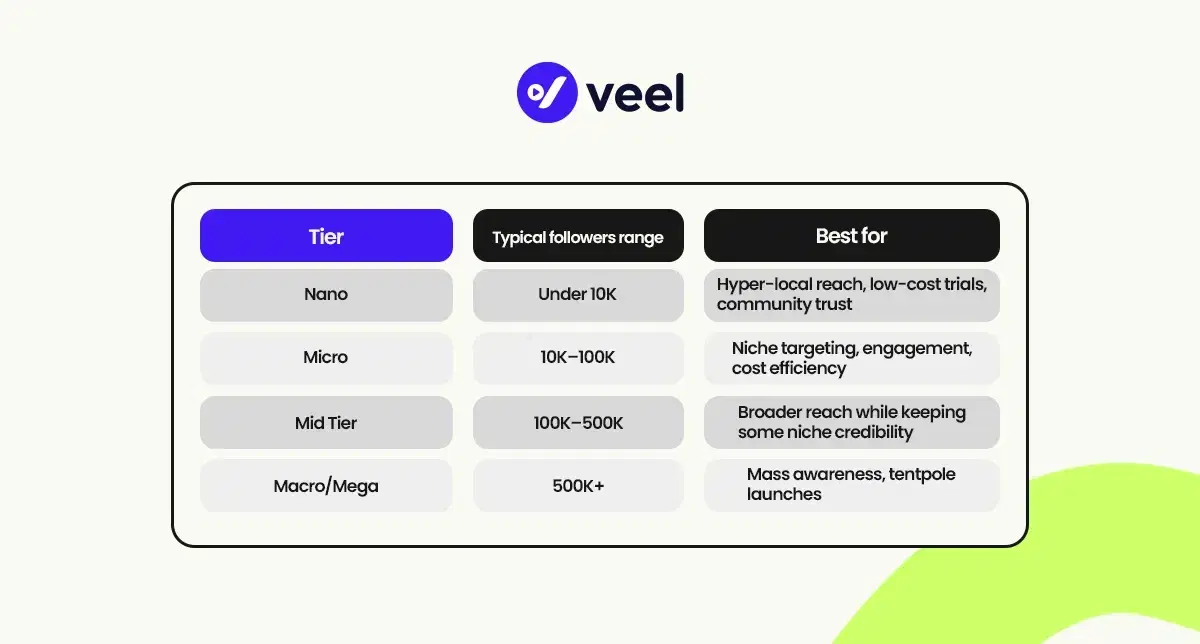
Tiers shift slightly by platform - TikTok bands skew lower because of how the app distributes content virally, while YouTube audiences tend to run higher.
When to Choose Micro-Influencers Over Macro Creators
- Engagement over eyeballs: Micro-influencer audiences feel a personal connection to the creator, so likes, comments, and saves run higher per follower than on macro accounts.
- Budget efficiency: The cost of one macro deal usually buys partnerships with several micro-influencers - more content, more angles, more placements.
- Niche precision: If your product serves a specific community, micro-influencers already own that audience, so you waste less spend on people who were never going to buy.
- Conversion intent: Micro-influencers carry more weight in the actual purchase decision, which matters when the goal is sales, not just impressions.
Real Brand Examples
Top-ranking competitor content consistently pairs claims with named, specific case studies , this is the single biggest gap between a generic guide and one that ranks and gets cited. Structure this section as: Brand → creator/tactic → concrete result (views, CPA, follower growth, revenue). A few published examples worth citing as a model for the format (verify current figures before publishing, and swap in your own client case studies if you have them, since original case studies are a stronger ranking and trust signal than referencing someone else's):
- A DTC apparel brand ran a product-seeding campaign with a cohort of micro-influencers and measured results in original content volume, engagement rate, and cost-per-acquisition rather than impressions alone.
- A CPG brand used dozens of local micro-influencers to hit a specific reach and cost-per-new-follower target, reporting the exact spend-to-follower ratio achieved.
- A subscription brand used micro-influencers to build a reusable content library, measuring value in impressions generated per content asset rather than per campaign.
Action item: Replace this section with 2-3 of your own (or your client's) real campaign results before publishing - specific, named, numbers-backed case studies are what separates page-one content from page-three content on this topic.
How to Find Micro-Influencers
Discovery Methods That Actually Work
- A creator marketplace: Surfaces vetted micro-influencers by niche, audience data, and past performance ,far faster than manual outreach.
- Social search and hashtags: Search niche hashtags on Instagram, TikTok, and YouTube for micro-influencers already talking about your category.
- Competitor and category audits: See who's tagging or partnering with adjacent brands, those creators already understand your space.
- Your own community: Check tagged posts, comments, and DMs; some of your best micro-influencers may already be customers.
- Inbound applications: An open creator intake form pre-qualifies interest before you spend outreach time.
Micro-Influencer Vetting Checklist
- Engagement authenticity: Genuine comments, not emoji spam. Compare engagement rate to platform and niche benchmarks.
- Audience demographics: Confirm followers match your target market on age, location, and interests.
- Content quality and tone: Review recent posts for production value and brand fit.
- Brand safety: Check for controversial content or conflicting brand partnerships.
- Follower authenticity: Watch for sudden follower spikes or low-quality followers.
- Past partnership performance: Look at prior sponsored content and whether disclosures were handled properly.
How to Build a Micro-Influencer Campaign, Step by Step
1. Set Objectives and KPIs First
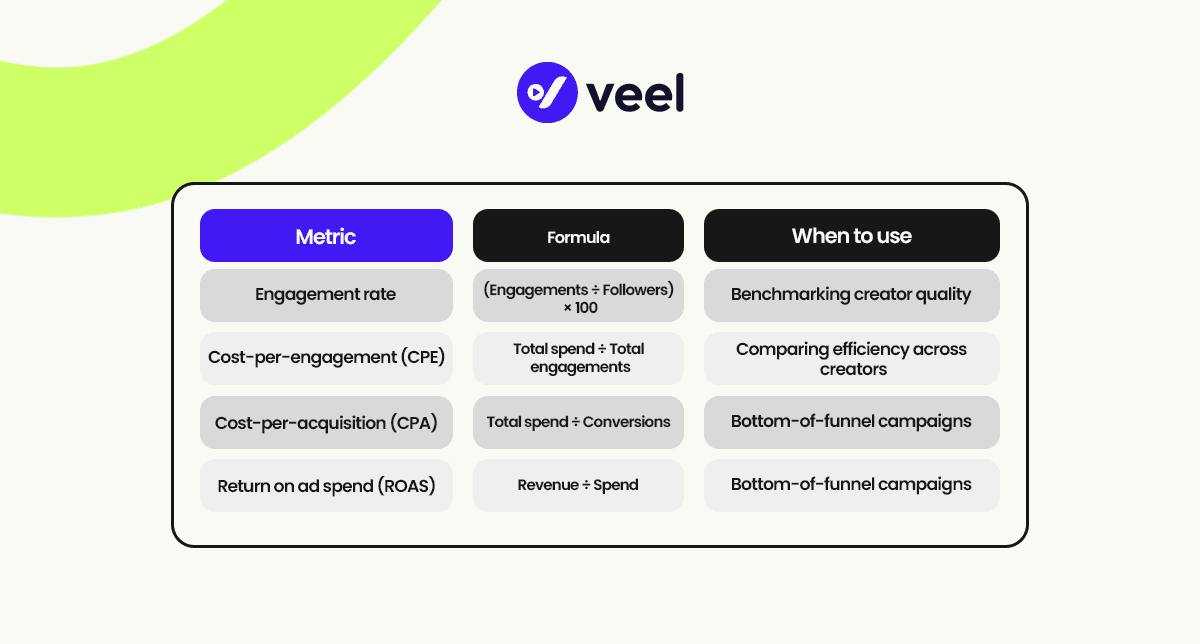
Pick one primary KPI (awareness, engagement, traffic, or conversion) and one secondary KPI. Top-of-funnel micro-influencer campaigns should optimize for reach; bottom-of-funnel for cost-per-acquisition.
2. Define Your Audience and Ideal Micro-Influencer Profile
Work backward from the audience you want to reach to the creator profile that reaches them. Document non-negotiables versus nice-to-haves.
3. Choose Your Platform(s)
Instagram, TikTok, and YouTube each suit different content types and audiences - match the platform to where your target demographic actually spends time, not just where your brand already has a presence.
4. Outreach, Negotiation, and Compensation
Personalize every pitch and reference specific posts. Common compensation models for micro-influencers include flat fees, performance-based commissions, product gifting, or a hybrid. Put deliverables, timelines, usage rights, and payment terms in writing even on small deals.
5. Brief Micro-Influencers for On-Brand Content
Give creators objectives, key messages, required disclosures, and examples of "good" , then leave room for their own voice. Overly scripted content underperforms because it reads as an ad.
6. Launch and Amplify With Paid Spend
Watch early engagement in the first few hours as a signal of what's resonating, then amplify top performers with paid spend, running ads from the creator's own handle to preserve authenticity.
Common Challenges (and How to Solve Them)
Competitor content that ranks well treats objections directly instead of only listing benefits. The recurring challenges brands hit with micro-influencer marketing:
Finding the right fit. The biggest reported challenge is narrowing a large creator pool down to the right match.
Solution: Use a marketplace or UGC platform with demographic/interest filters, or study which creators your direct competitors already work with.
Fake followers and engagement. Purchased followers and engagement pods are common enough to require active screening.
Solution: Check engagement-to-follower ratio, review follower profile quality, and use a fraud-detection or social media audit tool rather than relying on follower count alone.
Managing multiple creators at once. Coordinating briefs, approvals, gifting, and payment across a cohort of micro-influencers is a real operational load.
Solution: Use an influencer Campaign to centralize communication and tracking rather than running it through email and spreadsheets.
FTC/regulatory compliance. Micro-influencers are sometimes less familiar with disclosure requirements than established creators.
Solution: Put disclosure requirements directly in the contract and provide a short compliance guide with every brief.
Measuring ROI. Unlike paid ads, influencer impact isn't purely last-click.
Solution: Use Performance Tracking campaign and Combine UTM tracking, unique promo codes, and post-purchase attribution rather than relying on any single method.
How to Measure Micro-Influencer Marketing ROI
- UTM parameters: Tag every link with source, medium, campaign, and creator ID.
- Promo codes: A unique code per micro-influencer attributes sales directly.
- Platform-native attribution: Use TikTok, Meta, and YouTube's built-in tools alongside your own tracking.
- Post-purchase surveys: "How did you hear about us?" catches attribution that pixels miss.
- Incrementality testing: Holdout tests or geo-lift studies isolate the lift micro-influencer activity creates above what would have happened anyway - the most defensible number for a leadership audience, though it requires real volume and budget to run properly.
How to Scale a Micro-Influencer Program
Recruit a core group of micro-influencers for ongoing partnerships rather than one-off deals - long-term partners already know your product and voice, which means faster turnaround and more consistent quality. Negotiate usage rights upfront so you can repurpose content in paid ads, email, and product pages well beyond the original post.
Micro-Influencers vs. UGC Creators: Which Fits Your Goal?
If you just need authentic-feeling assets for your own paid ads and product pages rather than a creator's audience and reach, a UGC creator is often the more efficient buy than a micro-influencer post. Most mature programs eventually use both.
Related Reading
- Micro vs. Macro Influencers: Which Tier Converts Best
- Nano Influencers: A Secret Weapon for Small Brands
- UGC Creators vs. Influencers: What's the Difference
- How to Measure Influencer Marketing ROI
Ready to Turn Micro-Influencers Into a Measurable, Always-On Growth Channel?
Get started with Veel to find vetted micro-influencers, run campaigns end to end, and report ROI your team can actually defend.