
Garima GurungMarch 4, 2026
Instagram Is Betting on ‘Real’, but What Does Real Even Mean Anymore?
What does real means ?
It’s 2026 now, and we know, 2026 is the new 2016, but it’s not just the year that’s different. It’s the Instagram momentum, too. In 2016, Instagram rewarded perfection. The glossy feeds, color-graded grids, carefully edited pictures; vsco, we see you! But in 2026, Instagram is betting on imperfection.
However, what happens when AI can fake both?
Adam Mosseri, Head of Instagram, wrote in his article that what we now know as the era of AI will make raw and unpolished content more valuable because it has a touch of humanity. However, a critic responded that raw is just another aesthetic that AI will quickly imitate.
They’re both right, but what’s missing is trust.
Let’s sit and imagine a scenario together. You’re watching a video filmed on a shaky camera. A creator sits in front of it and casually starts ranting about a skincare product. Their speech stumbles a bit, has short pauses, including a laugh, which feels spontaneous and real.
Except, it’s entirely AI-generated; the face, voice, the room, and even the imperfections.
If the stumbles, shaky framing, and pauses are manipulated, then the authenticity of a visual means nothing.
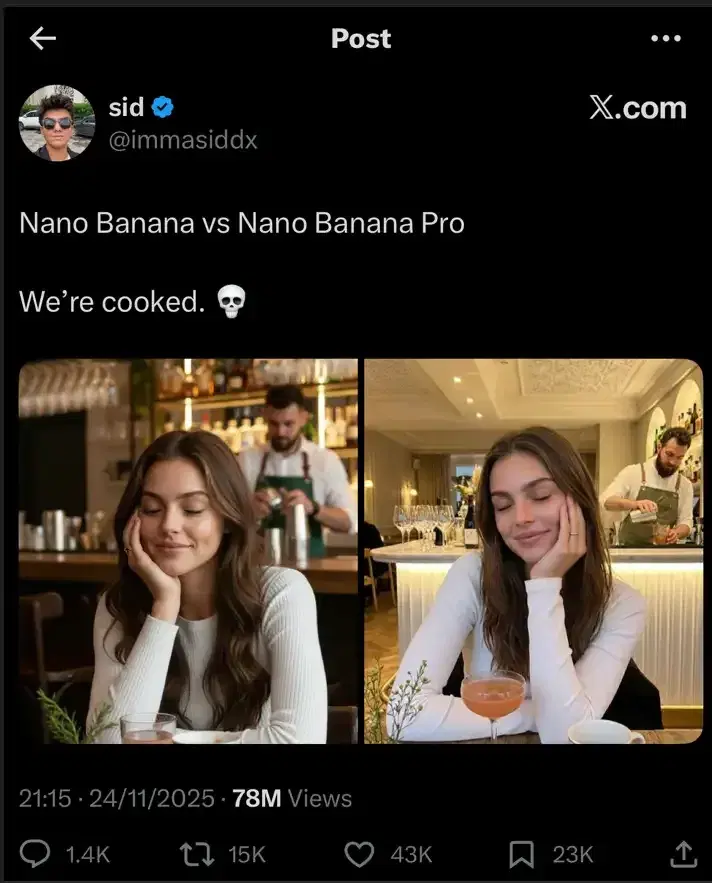
Nano Banana vs Nano Banana Pro
If everything looks human, what actually is?
We’ve seen this cycle before on Instagram. Using filters and heavily edited pictures meant expressing oneself until it’s too much: hyper-curated feeds once felt aesthetic till they started to feel fake. Every shift started to feel more real than the last and changed into something that could be engineered.
For creators , it’s obvious what the concern is: how do you stay unique when AI can mass produce even personality?
For brands , the risk is even bigger. Falling into the pitfall of trust erosion, creating a culture of suspicion, AND being associated with fictitious or misleading content.
So what does authenticity look like when brands are involved?
In this time and place, it’s come to a point where it’s not about how beautiful, aesthetically pleasing, or good the content looks. Because when AI generates polished campaigns in seconds, personating even the imperfections, then the differentiator won’t come from how the content looks visually, but who stands behind it.
What sets one campaign apart from the other won’t be lighting, production value, or the tone of voice. It will be the creator’s identity, their consistency over time, the reputation they have accumulated, and their relationship with their audience.
A creator is not just a face delivering a message. They’re a timeline; somebody with opinions, a history of brand alignments, and a set of values that people have questioned, validated, and experienced over time.
For brands, the question isn’t, “How should we look?”, but “Will the people watching our content believe it?”
Because in a feed where everything looks real, trust becomes the only thing that is.