
Richa TandukarSeptember 1, 2026
Your Holiday Marketing Campaign Should Start Before the Holidays
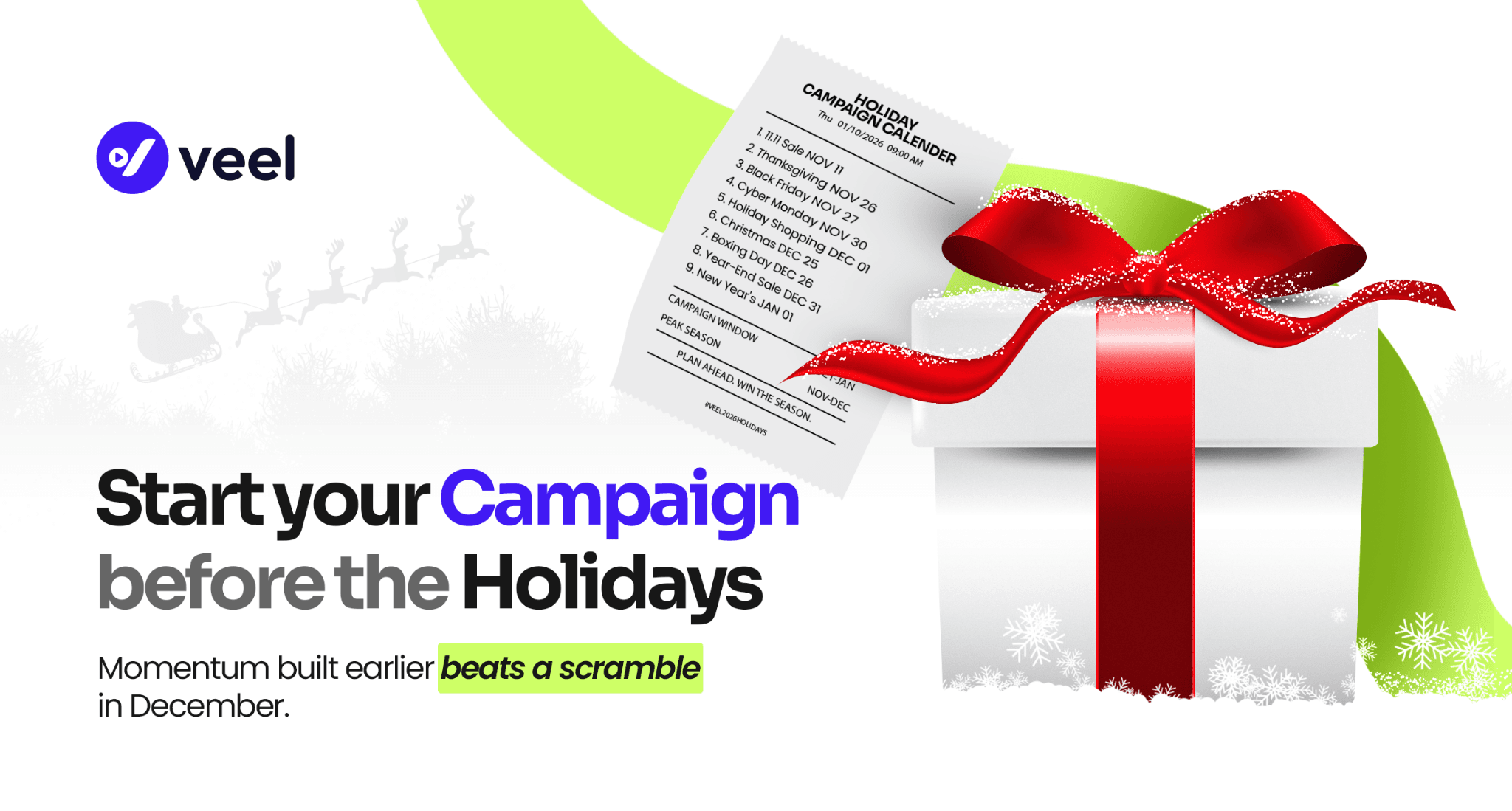
By the time November arrives, the holiday marketing noise is impossible to miss.
Every brand is launching Black Friday offers. Every creator has a gift guide. Every inbox is filled with promotions. Social feeds are moving faster, ad costs are becoming harder to ignore, and marketing teams are trying to produce enough content to keep up.
And somewhere in the middle of all that, a familiar thought appears:
“We should have started this earlier.”
The truth is, holiday marketing doesn't really begin in November. For brands that want to stand out, it begins months before the shopping rush.
September Is Earlier Than It Feels
September may seem too early to think about Christmas, Black Friday, or holiday shopping. But consumers are already starting to think ahead.
According to the National Retail Federation, 42% of holiday shoppers planned to browse or buy before November in 2025. The reasons are simple: people want to spread out their budgets, avoid the stress of last-minute shopping, and take advantage of good promotions.
That creates an important window for brands.
Instead of waiting until November to introduce a product, September and October can be used to build the foundation of your holiday marketing strategy. This is the time to identify your priority products, understand your audiences, recruit creators, and start producing the content you'll need later.
By October, you can begin introducing holiday themes, gift ideas, product stories, and teaser content. You're not necessarily asking people to buy yet. You're giving them a reason to remember you.
Then, when the big shopping moments arrive, you're no longer starting from zero.
Let Creators Start the Conversation
Think about the way people actually shop for gifts.
They ask friends what they're buying. They search for reviews. They watch unboxing videos. They look for recommendations from people whose taste they trust. Increasingly, they discover products through creators before they ever see a traditional advertisement.
That makes creators a natural part of a holiday marketing campaign.
A creator can turn a product into a gift idea, demonstrate how it works, share a genuine review, or show how it fits into someone's everyday life. And instead of producing one piece of holiday advertising, brands can build a library of UGC content that can be used across social media, websites, paid campaigns, email, and other marketing channels.
The earlier you start, the more time you have to test what actually resonates.
Maybe one creator's product demonstration performs better than a polished brand video. Maybe a simple "gift ideas under $50" concept generates more engagement than a traditional product post. Maybe customers respond particularly well to creators who show the product in real-life situations.
Those insights are difficult to discover when you're producing everything at the last minute.
Your Creators Can Become More Than Content Creators
There is another opportunity that becomes particularly interesting during the holiday season: affiliate marketing.
Instead of thinking of creators only as people who produce content for your brand, think of them as an extension of your sales team.
A creator recommends your product to their audience. Someone clicks their link or uses their code. A purchase happens. The creator earns a commission, while the brand generates a measurable sale. The relationship becomes performance-driven.
For a holiday campaign, this can create a distributed sales network where dozens or even hundreds of creators are helping customers discover products and make purchasing decisions.
A creator might publish a holiday gift guide. Another might share their favorite products for a specific audience. Someone else might create a last-minute gifting video. Each creator brings their own audience, voice, and context to the same campaign. And unlike a one-off sponsored post, affiliate marketing gives creators a reason to keep recommending the product when their audience is ready to buy.
This Is Where Veel Comes In
The challenge isn't simply finding creators. It's managing the entire process at scale.
Veel gives brands access to a creator pool of 550,000+ verified creators across 121+ countries, making it easier to build campaigns around different audiences, markets, and content styles.
From creator discovery and campaign management to contracts, payments, content, distribution, and performance analytics, the platform brings the moving parts of creator marketing together
That becomes especially useful when holiday campaigns start growing.
You can see which creators are performing, which videos are getting attention, and which content is actually contributing to your campaign goals. The objective isn't to create hundreds of videos just for the sake of having hundreds of videos. It's to understand what works and put more behind it.
The Holiday Shopping Season Is Getting Bigger & More Digital
The opportunity is significant. U.S. consumers spent a record $257.8 billion online during the 2025 holiday season, up 6.8% from the previous year. Mobile accounted for 56.4% of online spending, while traffic to retail websites from generative AI sources increased by 693.4% year over year.
Consumers aren't simply waiting for Black Friday anymore. They're discovering, researching, comparing, and shopping across more channels than ever. That means your holiday content needs to do more than announce a discount. It needs to help people discover your product, understand it, trust it, and eventually choose it.
Creators can play a powerful role in each of those moments.
Start Earlier. Learn Earlier. Scale Earlier.
The biggest advantage of starting your holiday marketing campaign in September isn't that you'll have Christmas content sitting on your social calendar for four months.
It's that you'll have time to learn.
You can test creators before the biggest shopping days. You can discover which messages work. You can build your affiliate network. You can create a bank of UGC content. You can identify your best-performing videos and give them more distribution.
Then, when November arrives and everyone else is rushing to create their holiday campaign, you're already moving. The holiday season may officially begin in November, but the brands that win attention often start much earlier.
Plan in September. Start creating in October. Tease in October. Scale when the shoppers arrive.
Because the best holiday marketing campaign isn't the one that shouts the loudest in November.
It's the one that started the conversation months before.